Stroke remains a leading cause of disability in India — yet many families delay hospital care because early symptoms are mistaken for tiredness or low blood pressure. In stroke neurology, we say: time is brain.
What Is a Stroke?
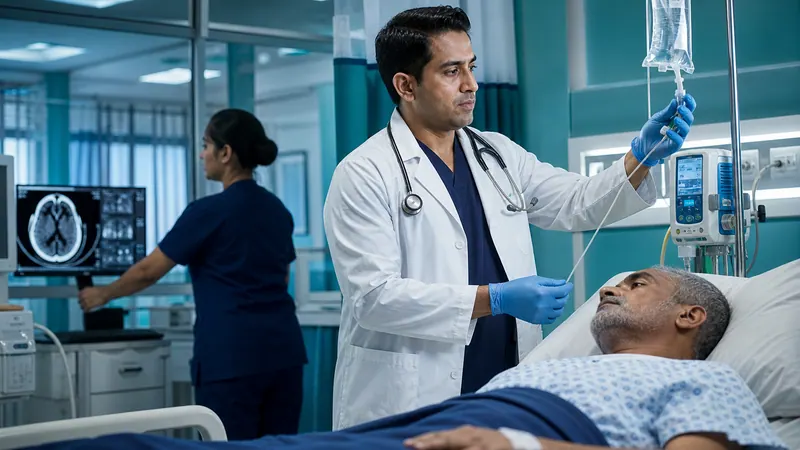
A stroke occurs when blood flow to part of the brain is interrupted — either by a clot (ischaemic stroke, ~85% of cases) or bleeding (haemorrhagic stroke). Transient ischaemic attacks (TIAs) produce similar symptoms but resolve within 24 hours — and are a critical warning sign.
BE FAST — Remember These Signs
- B – Balance: Sudden loss of balance, dizziness, or trouble walking.
- E – Eyes: Sudden vision loss, double vision, or blurred vision.
- F – Face: Drooping on one side when smiling.
- A – Arms: Weakness or numbness in one arm — it may drift down when raised.
- S – Speech: Slurred speech, inability to speak, or confusion.
- T – Time: Call emergency services immediately. Note when symptoms started.
Other Symptoms You Should Not Ignore
Sudden severe headache (worst of life), loss of consciousness, one-sided numbness, or sudden confusion — especially in someone with hypertension, diabetes, or atrial fibrillation — require urgent evaluation.
What to Do While Waiting for Help
Do not give food or water. Do not drive the patient yourself if ambulance access is available. Keep them on their side if vomiting. Note the exact time symptoms began — this determines eligibility for thrombolysis.
Stroke Prevention in Daily Life
Control blood pressure, diabetes, and cholesterol. Stop smoking. Stay physically active. Take prescribed blood thinners consistently if you have atrial fibrillation. Regular follow-up after a TIA or stroke significantly reduces recurrence risk.
At ZOI Hospital, Attapur and Kondapur, we provide stroke evaluation, TIA assessment, and long-term prevention planning across Hyderabad and Telangana.
Do not wait — call for urgent neurological evaluation at ZOI Hospital, Attapur and Kondapur.